Go To WarsawHoly Week in the capital. Varsovians’ Easter customs
Holy Week in the capital. Varsovians' Easter customs
Warsaw lives to a different rhythm than usual during Easter, and the spring weather is conducive to spending time outside. The city’s daily pace slows perceptibly and Varsovians like to spend time on walks while celebrating Easter traditions.
Good Friday
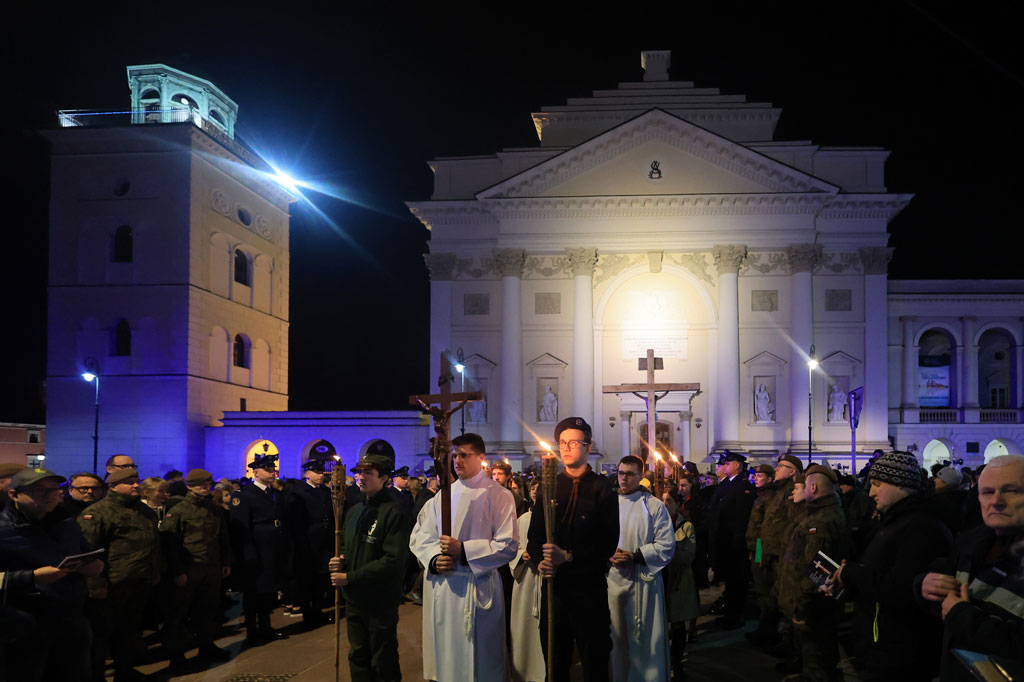
The Easter holidays in Poland are a time of intensified religious observance, accompanied by a unique ambience. In Warsaw, this can be seen especially in the Old and New Towns and along the Royal Route, where the numerous churches are sometimes only a few dozen metres away from each other and the Holy Week celebrations often move outside—onto the streets and squares. On the evening of Good Friday, when Christians of all denominations commemorate the Passion and death of Christ, the Central Stations of the Cross is held in Warsaw every year. This year, the solemn procession will start from the academic church of St. Anne and pass through the streets to St. John’s Archcathedral. On the same day, Tombs of the Lord are arranged in all churches and are unveiled after the Liturgy of the Passion of the Lord.
Central Stations of the Cross, photo: Szymon Pulcyn, City of Warsaw
The Tombs of the Lord
The tradition of visiting the Tombs of Christ dates back to the 16th century and still lives on in Warsaw. Throughout Holy Saturday, churches are open and the symbolic graves become places of prayer and adoration of the Blessed Sacrament, displayed in a monstrance. The forms of tombs are diverse, from the simplest—depicting a grotto in which the figure of the deceased Christ rests—to extensive creations making reference to current events and social issues. On this day, many Varsovians arrange to go for walks in the Old Town—where numerous Tombs of the Lord can be seen—to combine this form of celebration with a family gathering.
Old Town, photo: City of Warsaw
The Ujazdów Calvary (Kalwaria Ujazdowska)
Following the trail of churches through the New and Old Towns, and then along Krakowskie Przedmieście and Nowy Świat, we come to Plac Trzech Krzyży. The Tomb of the Lord in St Alexander’s Church here is unique—there is a Baroque statue of Christ carved from white marble, which is the work of an Italian sculptor. It is one of the surviving remnants of an 18th century sacral complex—Kalwaria Ujazdowska (the Ujazdów Calvary). The Calvary was built during the reign of King Augustus II and consisted of 28 small chapels located along the road running to Ujazdowski Castle (today’s Aleje Ujazdowskie). The castle garden was home to the most impressive of them all—the chapel of the Tomb of the Lord. This chapel is the original home of the figure we can see today in the church on Plac Trzech Krzyży. Following the demolition of Kalwaria Ujazdowska in 1792, it was successively moved to various Warsaw churches until in 1826 it was finally placed in the church of St. Alexander, where it has survived despite the church’s destruction during the Warsaw Uprising. Another preserved element of the Calvary is two stone columns crowned with crosses, which are located opposite the entrance to the church. They marked the beginning of the Stations of the Cross.
Plac Trzech Krzyży, photo: City of Warsaw
The blessing of food
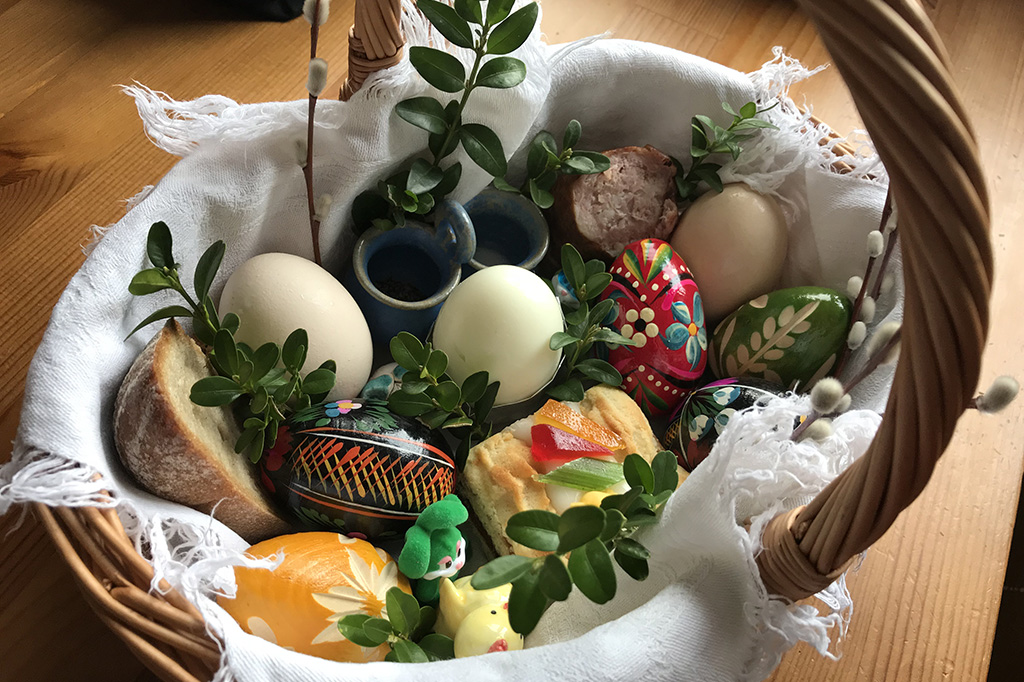
On Holy Saturday throughout Poland, Easter food is taken to church to be blessed, carried in small baskets decorated with catkins and green boxwood. The basket traditionally contains a lamb made of sugar, cake or butter, as well as basic foodstuffs such as bread, salt, sausage and eggs, which are shared when making wishes during the Easter breakfast. It is a custom throughout the Slavic region to dye and decorate Easter eggs. The patterned ones are called ‘pisanki’ and the ones dyed a single colour ‘kraszanki’. A few minutes’ walk from Krakowskie Przedmieście, 1 Kredytowa Street is home to the State Ethnographic Museum, where you can see a collection of Easter eggs decorated through various techniques from different regions of Poland at the ‘Celebration Time’ exhibition.
Easter basket, photo: Iwona Gmyrek
Easter treats
While strolling around Warsaw, it is worth taking a break and stopping at one of the city’s many patisseries or cafes to taste traditional Easter sweets: yeast cake or mazurek—a characteristic Polish delicacy eaten only once a year, at Easter. It is a short-crust or sponge cake with a sweet filling of various flavours, decorated with nuts and candied fruits, and often also Easter motifs such as catkins, chicks, or the inscription ‘Hallelujah’. For lunch, it is worth ordering żurek—sour rye soup—with egg and white sausage, which is the most typical Easter dish in Warsaw.
Żurek—sour rye soup, photo: Anna Włodarczyk
Cemeteries
If you want a more atmospheric walk away from the hustle and bustle of the city, visit one of Warsaw’s historic cemeteries: Stare Powązki or the Evangelical and Orthodox cemeteries in the Wola district. During Easter, Varsovians often visit the graves of their loved ones, not forgetting also distinguished citizens of the city. Spring flowers and decorations related to Easter symbolism appear on graves—willow branches adorned with catkins, Easter palms, young oats in pots, and candles in sometimes surprising shapes of chicks and bunnies. Painted eggs are traditionally left on graves at the Orthodox cemetery.
Author: Małgorzata Kunecka, State Ethnographic Museum in Warsaw
Stare Powązki Cemetery, photo: Tomasz Nowak
For more tips on how to visit Warsaw sign up for our newsletter and stay up to date!