Go To WarsawWarsaw on the screen. A walk through movie stories
Warsaw on the screen. A walk through movie stories
Author: Agnieszka Kuś, Warsaw guide
Is it possible to explore Warsaw with film as a guide? Absolutely! For years, the capital has been attracting filmmakers, and its streets, historic tenement houses, palaces and modern skyscrapers have become the backdrop for stories watched by audiences the world over. Warsaw can play the role of a 19th-century metropolis, a World War II city, and also… itself! A modern European capital, full of vibrant restaurants, cafés, shopping centres and quieter residential areas.
Warsaw lives and breathes cinema
Exploring places familiar from the big screen is just one way to get to know Warsaw’s cinematic side. This autumn, it’s also worth visiting cinemas themselves — from October 9 to 18, the 42nd Warsaw International Film Festival will be held. Over the course of ten days, audiences can look forward to 330 screenings of 190 films from around the world, with many of the movies premiering in Warsaw. And after the screening? We’re heading into town! Exploring movie locations is a great way to discover Warsaw off the beaten track. Here is our hand-picked selection of films and TV shows from recent years that will take you to famous landmarks as well as the city’s lesser-known streets, courtyards and hidden nooks. And perhaps you’ll recognise a location from your favourite film along the way.
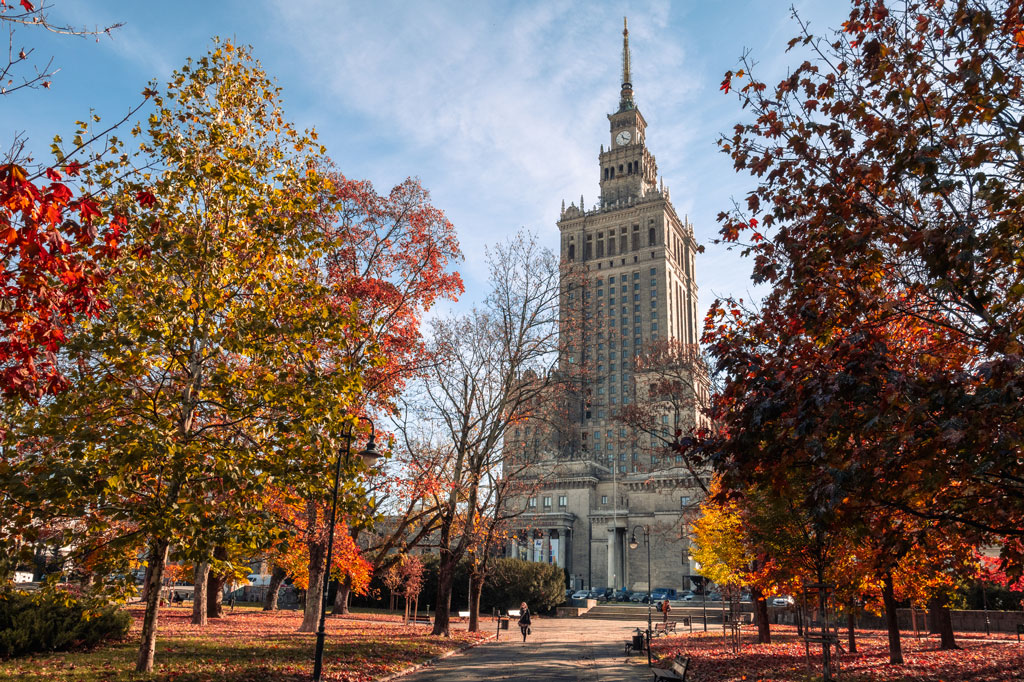
Palace of Culture and Science, photo: Łukasz Kopeć
‘The Pianist’. Tracing a Warsaw that has disappeared
One of the best-known movies associated with Warsaw is Roman Polański’s 2002 film The Pianist. The three-time Oscar-winning production tells the true story of Władysław Szpilman, a Polish-Jewish pianist who survived the German occupation of Warsaw and the Holocaust. Although some scenes were shot in Germany, Warsaw’s Praga district, on the right bank of the Vistula River and beyond the historical boundaries of the ghetto, played an important role in recreating the wartime city. Why not start a walk inspired by ‘The Pianist’ on Mała Street, where the filmmakers used the preserved pre-war buildings to recreate occupied Warsaw. A few minutes away, on Stalowa Street, Polański’s crew reconstructed other parts of the ghetto. Near the intersection with Konopacka Street, a footbridge was built for the film, which in reality connected two parts of the ghetto over Chłodna Street, on the other side of the Vistula.
Mała Street, photo: Filip Kwiatkowski
Cinematic Praga. From film set to urban life
It’s worth extending your walk to discover modern Praga. Stalowa Street, with its pre-war tenement houses and old courtyards, has retained an ambience completely different to that of the Downtown (Śródmieście) or Wola districts. From artisanal bakeries and local restaurants to antique shops, popular clubs, and bars — it’s the perfect place to combine exploring film locations with discovering a lesser-known side of Warsaw.
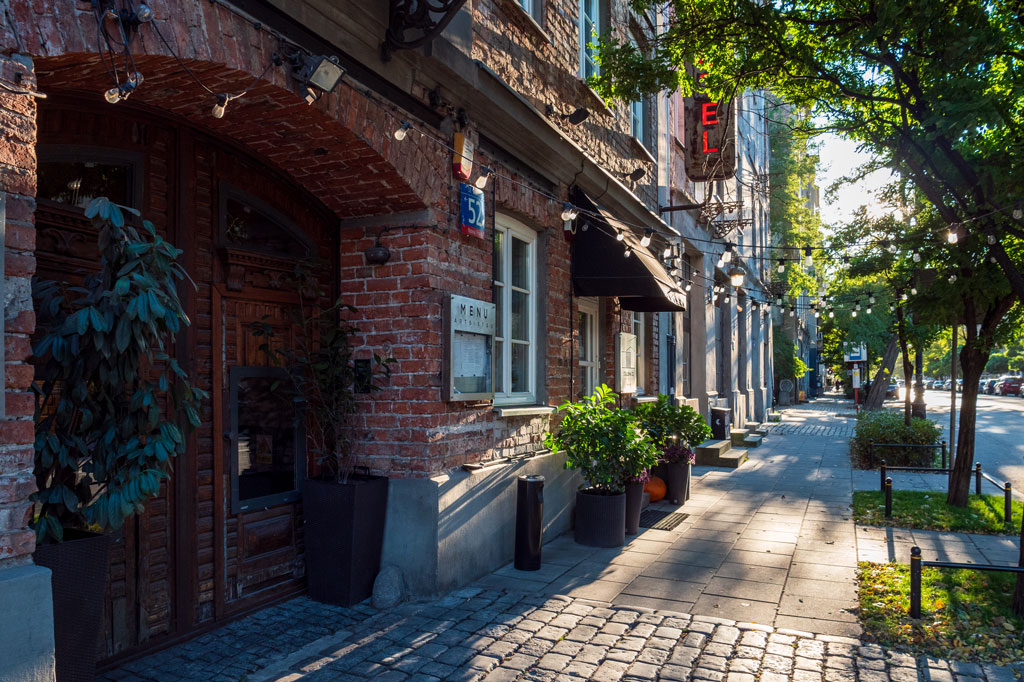
Stalowa Street, photo: Łukasz Kopeć
'A Real Pain'. Warsaw as the starting point of a family journey
What happens when a trip becomes an expedition in search of your own roots? This is the theme of ‘A Real Pain’ (2024). Jesse Eisenberg and Kieran Culkin play cousins who come to Poland from the United States to learn about their family history and honour their grandmother’s memory. Among the locations the Warsaw scenes were filmed in are Krasiński Square and the Muranów district. You can start your walk in the heroes’ footsteps at the Warsaw Uprising Monument and then continue towards the POLIN Museum and the Monument to the Ghetto Heroes. This is a part of the city where modern buildings stand alongside places that serve as reminders of the history of the former ghetto and its inhabitants. And Jesse Eisenberg will be returning to cinematic Warsaw this autumn. The 42nd Warsaw International Film Festival will open with his latest film, ‘The Debut’ — another good reason to combine a cinematic tour of the city with a film screening.
POLIN Museum, photo: City of Warsaw
The great return of Wokulski and Łęcka
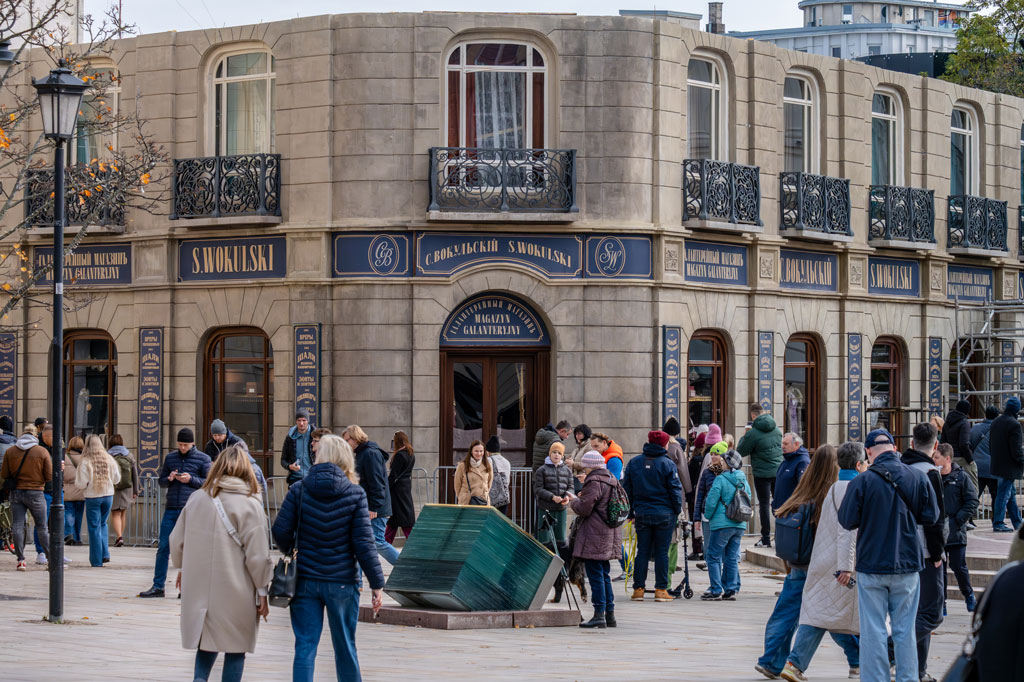
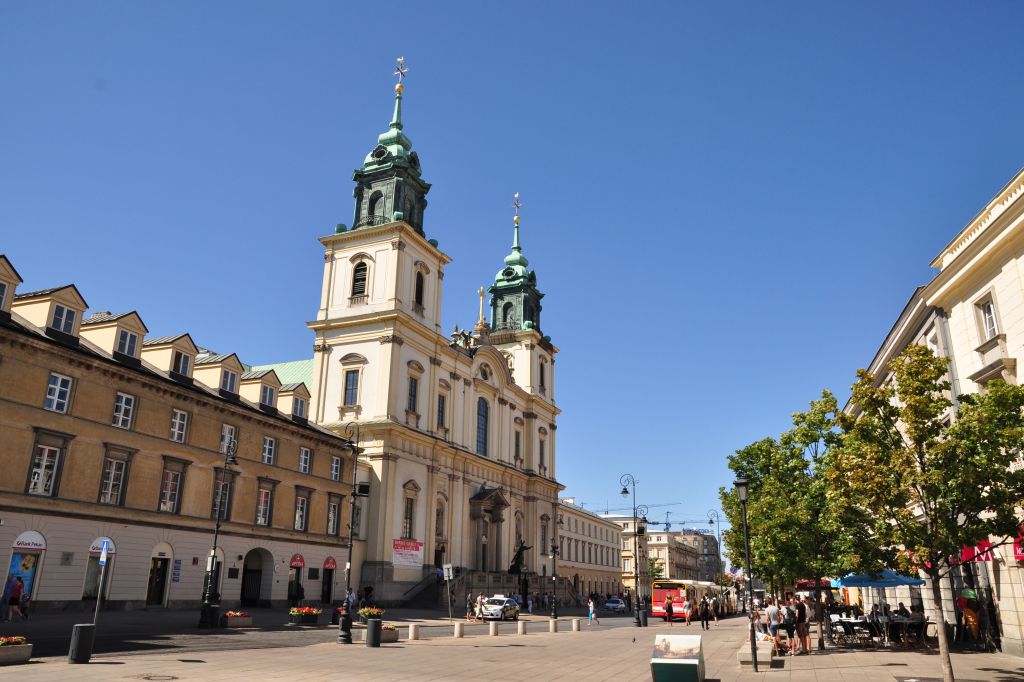
Let’s move on from contemporary cinema to the Warsaw of more than a century ago. In autumn 2026, Warsaw will once again become the city of Stanisław Wokulski and Izabela Łęcka — the main protagonists of Bolesław Prus’s 19th-century novel ‘The Doll’. The story has been made into two new screen adaptations: a series by Paweł Maślona, available on Netflix from September 16, and a film by Maciej Kawalski, which is being released in cinemas on September 30. This provides a great opportunity to take a walk through film locations and discover the Warsaw of the late 19th century. It’s worth starting out from Krakowskie Przedmieście, where scenes for these productions were filmed. For several weeks, this part of the city was transformed into a 19th-century metropolis, with old-world signboards, period costumes, and other props drawing crowds of locals and tourists alike.
Wokulski's shop, set design for the film 'The Doll', photo: Łukasz Kopeć
The Warsaw of 'The Doll'
The next stop is Aleje Ujazdowskie. Scenes for the film version of ‘The Doll’ were shot in Sobański Palace at number 13, where the residence’s historic interiors were transformed into the Łęcki family’s apartment. Not far from here is the Royal Łazienki Museum, where the film crew worked at locations including the Royal Garden, the White Pavilion, the Royal Theatre in the Old Orangery, and the Palace on the Isle. Here, the filmmakers did not need many props — the authentic architecture of old Warsaw itself created the setting for the story. The film tour is worth combining with a visit to the exhibition ‘Chic and Conventions. Costumes from the film The Doll’, running from September 16 to December 13, and showcasing 32 costumes from the latest film adaptation, including outfits worn by the lead characters.
Royal Łazienki, photo: Łukasz Kopeć
Prus's Warsaw for dessert. Łęcka's meringue and the city's sweet history
And after the walk? Time for something sweet! Bolesław Prus described Warsaw as “probably the yellowest city under the sun”. This quote from the novel has inspired Warsaw’s historic Lukullus patisserie to create special presentation packaging for its confections to mark the premiere of the new film adaptation. The yellow boxes, designed by illustrator Magda Kołejda, feature locations connected with the novel and its characters: the Palace on the Isle, the Old Orangery, the Hotel Europejski, Józef Grodzicki’s tenement house at 7 Krakowskie Przedmieście, and the tenement houses of the Old Town. So, Prus’s Warsaw has literally been put in a box!
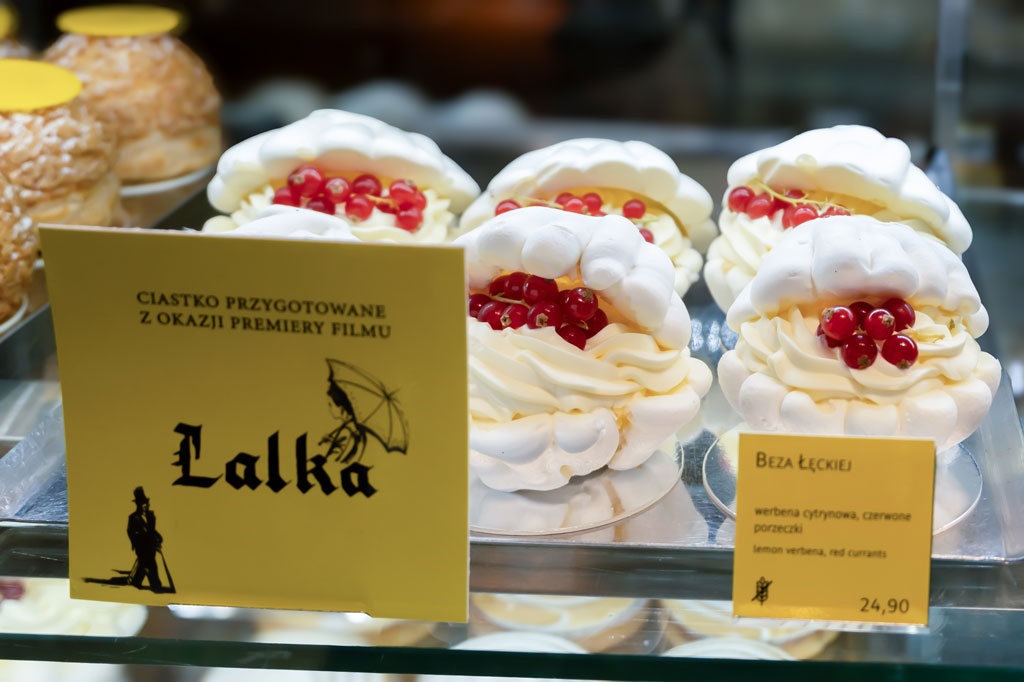
To mark the film’s premiere, Lukullus has also created a limited-edition ‘Łęcka Meringue’ (Beza Łęckiej) — a crunchy French shell-shaped meringue filled with a lemon and lemon verbena cream, and homemade redcurrant jam. The dessert will make its debut on September 19 and feature on the patisserie’s menu until October. There is just one rule: eat it with a spoon! This is an exceptionally appetising way to round off a cinematic and literary tour of Warsaw.
Chopin and Skłodowska-Curie. The Warsaw of great talents
Warsaw is the city where the stories of two world-famous Poles began. Though the film biographies of Fryderyk Chopin and Maria Skłodowska-Curie were shot mainly outside the capital, it is worth taking a walk in their footsteps through the real Warsaw. Michał Kwieciński’s 2025 film ‘Chopin, a Sonata in Paris’ (Polish title: ‘Chopin, Chopin!’) portrays the composer as a young artist conquering Parisian salons. The filming was done in Łódź, Pszczyna, Żagań, Bordeaux and Mallorca, among other locations. But in Warsaw, it is worth tracing the footsteps of the real Chopin and looking for the interactive musical benches situated at key sites from his life. This is a great way to discover the city’s musical history during a walk.
Chopin's bench photo: City of Warsaw
The life and discoveries of Marie Skłodowska-Curie are dramatized in two films: ‘Radioactive’ (2019, Polish title: ‘Skłodowska’), starring Rosamund Pike, and ‘Marie Curie: The Courage of Knowledge’ (2016, Polish title: ‘Maria Skłodowska-Curie’), starring Karolina Gruszka. Filming for the first was mainly done in Hungary and Spain, while the second was also filmed in Warsaw, although it focuses on the Nobel laureate’s life and career in France. A walk in her footsteps is worth starting at 16 Freta Street, where the scientist’s family home now houses the Maria Skłodowska-Curie Museum. Before setting off, it’s also worth downloading a brochure from the go2warsaw website about places connected with the Nobel Prize winner.
Maria Skłodowska-Curie Museum, photo: Filip Kwiatkowski
Modern Warsaw. A city that plays itself
There is more to Warsaw on film than period costumes and historic palaces. The modern capital is increasingly depicted on screen as a city of young people, cafés, restaurants and urban adventures. In the Netflix series ‘Sexify’ (2021–2023), among the places you can see are the interiors of the Warsaw School of Economics in Mokotów, where university lecture scenes were filmed. The college’s main building at 162 Aleja Niepodległości, a famous example of Warsaw’s modernist architecture with Art Deco elements, is well worth a visit.
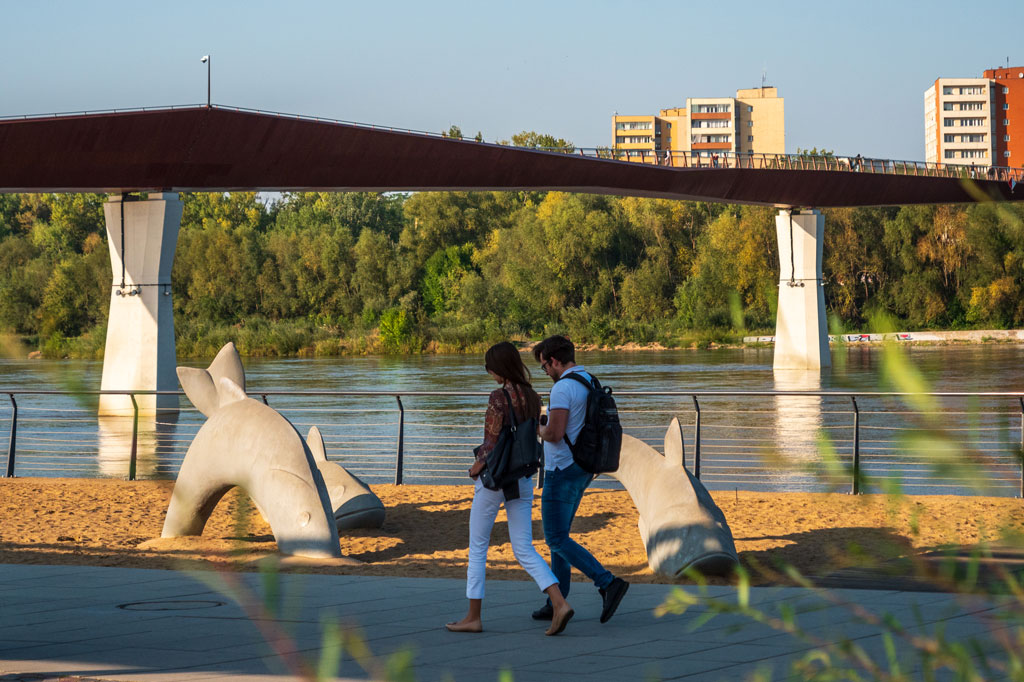
Meanwhile, ‘Still Here’ (2023, Polish title: ‘Warszawianka’), a series available on SkyShowtime, takes viewers into the world of the capital’s restaurants, bars and nightlife. Its protagonist — a writer and lover of big-city adventures played by Borys Szyc — wanders through Warsaw, taking us along to discover authentic film locations: the Vistula Boulevards, the area around the Palace of Culture and Science, and the cafés and clubs of the Powiśle district and Plac Zbawiciela. This is a tailor-made idea for a walk through modern Warsaw: from morning coffee in Powiśle, through the Vistula boulevards and Śródmieście, to an evening at Plac Zbawiciela — a popular spot for Varsovians to meet.
Vistula Boulevards, photo: Łukasz Kopeć
And now it's time for your own cinematic walk!
Warsaw holds surprises even for those who have visited many times before. Looking at familiar streets through a cinematic lens is all it takes to discover a completely new side of the city. You can stroll along Krakowskie Przedmieście, where the world of ‘The Doll’ was recreated, explore outdoor locations from ‘The Pianist’ in Praga, visit sites from ‘A Real Pain’, or stop for coffee at an establishment where scenes were shot for ‘Still Here’. If you also feel like exploring older productions related to the capital, you can pick up Jerzy S. Majewski’s 2016 book Warsaw in Film. A Walking Guide (available only in Polish: ‘Warszawa w filmie. Spacerownik’) — a guide to well-known and less obvious places connected with Warsaw’s movie-making history.
Krakowskie Przedmieście, photo: Łukasz Kopeć
For more tips on how to visit Warsaw sign up for our newsletter and stay up to date!