

Return of the Wilanów Poster Museum
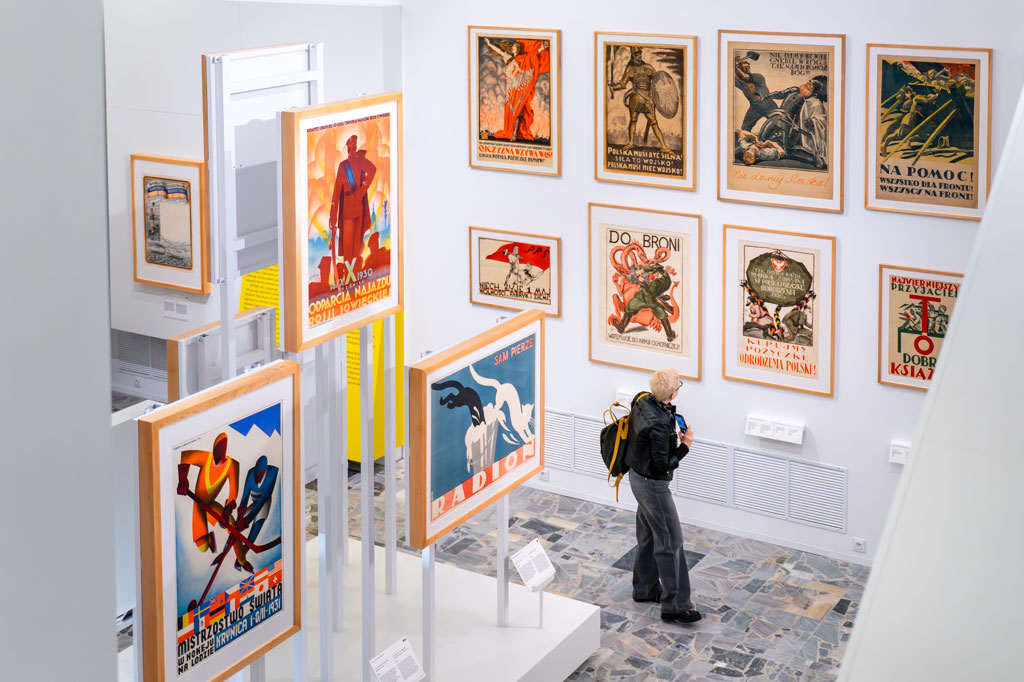
The Poster Museum in Wilanów has returned to the cultural map of the capital after a break of several years. It is the world’s first museum tonot only collect posters, but also make them available to a wide audience, thereby helping to establish this genre as a fully-fledged art form deserving of museum curation. The new exhibition ‘Polish Posters: The Collection’ presents 240 posters that tell the story of the last 130 years of everyday life on the streets of Polish cities.
The latest edition of the permanent exhibition marks a further stage in the institution’s history, reaffirming its role as a living and open cultural centre. The exhibition tells a multi-faceted and diverse tale of Poland, showing social, cultural and political changes that have left their mark on paper. The topics covered include serious issues − history, political propaganda and security warnings − as well as the world of entertainment: film, theater, music and fashion. At the same time, the exhibition traces the evolution of graphic design, from the early influences of painting and printmaking to the contemporary, autonomous language of the poster.
The poster uses a language that ruthlessly and accurately depicts reality, documents it and co-creates popular culture, containing a wealth of valuable, often coded information. The works on disply evoke images of a bygone world, including the streets of past of Kraków, Lviv and Warsaw. Posters allow an exploration of the history of Polish art, culture, society and politics, as well as the discovery of universal insights that remain valid today.
The exhibition ‘Polish Posters: The Collection’ encourages visitors to view the poster not only as an archival record of the past, but also as a living language of artistic expression. Work on the exhibition was preceded by public consultations involving adults and young people alike. Visitors stressed the importance of the exhibits’ authenticity, the clarity of their message, and the creation of stories about the society, culture and politics of times past.
Metaphor, symbol and international renown
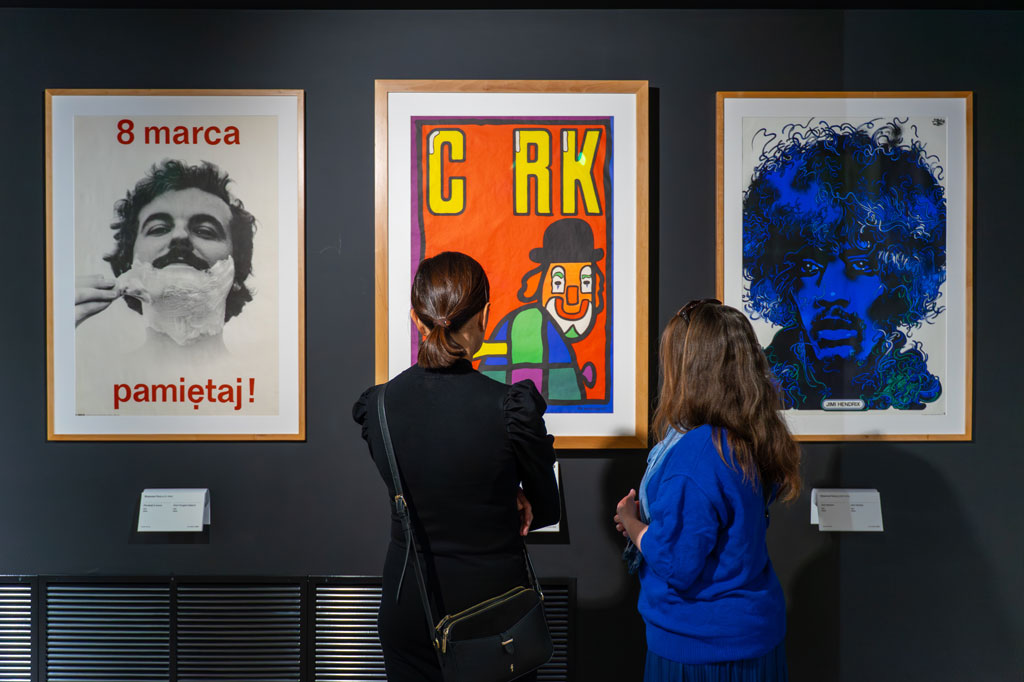
The Polish School of Posters is a unique genre in Polish art that developed after World War II, reaching the peak of its popularity in the 1960s. Polish artists such as Henryk Tomaszewski, Józef Mroszczak, Jan Lenica and Waldemar Świerzy proved that the poster can function as a work of art in its own right − full of metaphors, symbolism and sparkling wit. Their distinctive style contrasted with the commercial posters prevailing in the West at the time, and their designs won awards at international festivals and were published in prestigious magazines, becoming icons of global visual culture.
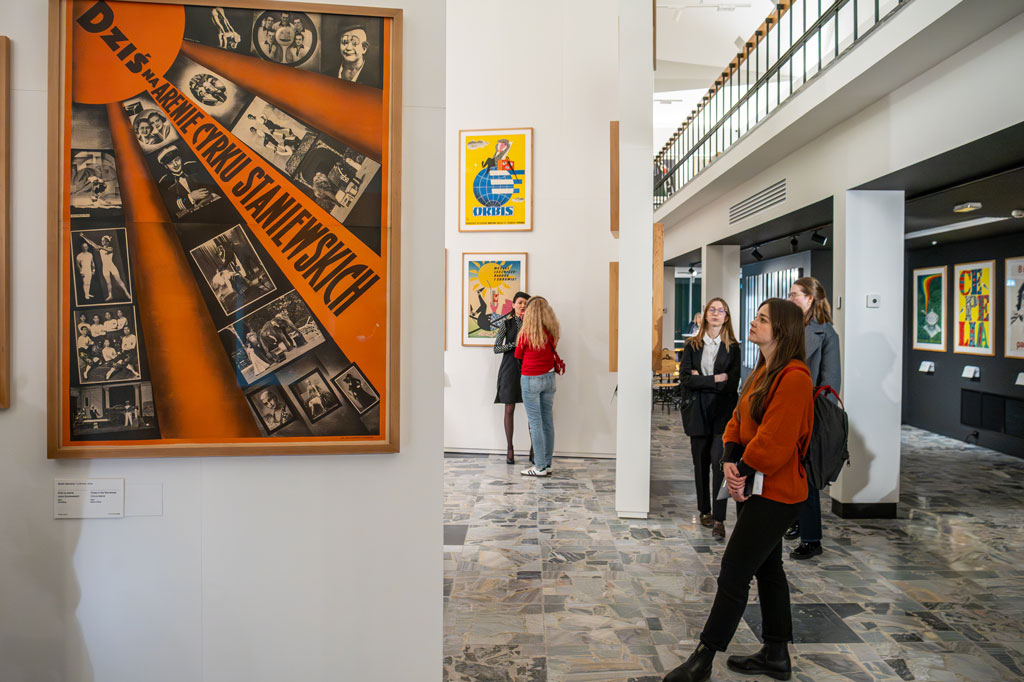
Foreign critics and curators have long underscored the originality of Polish posters. Their uniqueness was also highlighted by renowned director Martin Scorsese, who told The Guardian he has many Polish film posters in his collection. He emphasised that to people beyond Poland’s borders, these posters may seem peculiar, sometimes even incomprehensible, because at first glance the relationship between the image and the film is not always clear. However, after a while the special place cinema holds in culture becomes clear, as does the unique relationship between a film and its poster. They do not usually illustrate the plot literally, but portray the work’s essential concept, standing as an artistic interpretation of it.
The character of Polish posters was also greatly influenced by the social and political circumstances of the Polish People’s Republic. Official constraints, as well as a sense of isolation and a lack of prospects, were often reflected in the artists’ work. Despite the restrictions imposed on creators, they retained wide scope for artistic autonomy in their work. Creativity, bold experimentation and subtle irony make their work an inspiration for future generations of artists in Poland and around the world.
A collection of global importance
The growing popularity of posters and awareness of their artistic value led to the creation of a specialised institution. In 1968, the world’s first museum dedicated exclusively to the poster was opened in Wilanów. Its mission was not only to collect and protect the achievements of Polish artists, but also to emphasise that posters are fully-fledged works of art, meriting both museum curation and academic study.
The collection’s roots stretch back to before World War II, when collectors and artists donated individual works to the National Museum. Today, the collection contains over 63,000 works from Poland and abroad, of which about 36,000 are by Polish artists. Over its history of more than half a century, the Poster Museum has organised hundreds of exhibitions both at home and abroad, working with the world’s most important art institutions. It also conducts research, educational and publishing activities, systematically digitising its collections and cultivating international partnerships.
Three editions of the permanent exhibition
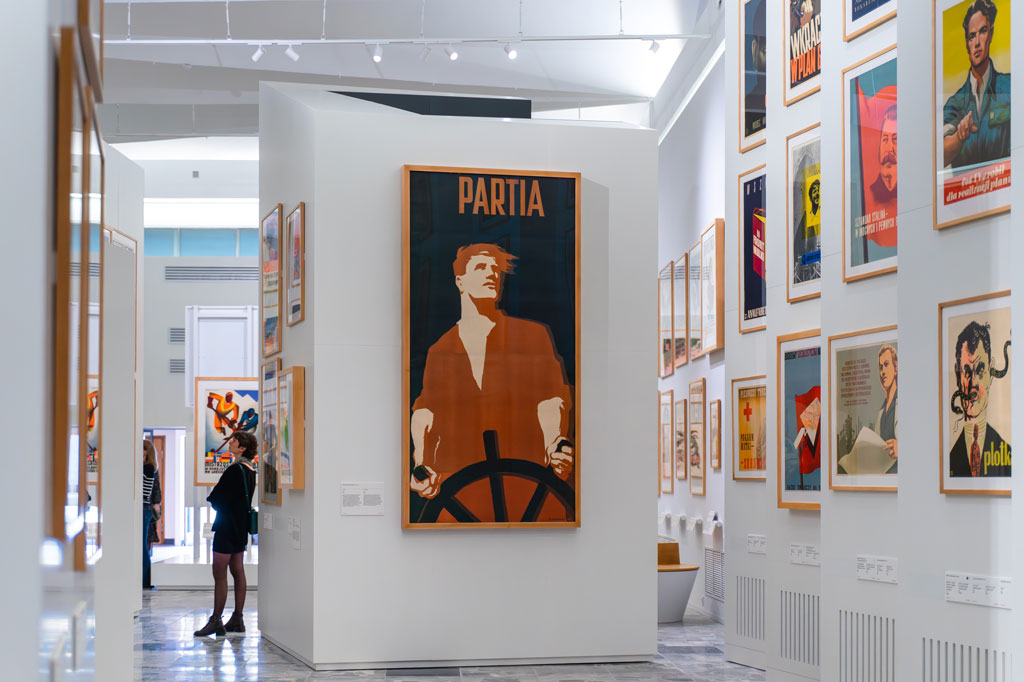
The permanent exhibition at the Poster Museum in Wilanów will be a regularly updated display. Being paper-based works, posters require special protection, so for conservation reasons they can be presented only for about three months at a time, in conditions of limited daylight and strictly regulated temperature and humidity. Following each display period, the exhibition will be temporarily closed and the works replaced with new selections. As a result, both the coherence of the exhibition’s message and the safety of its exhibits will be preserved.
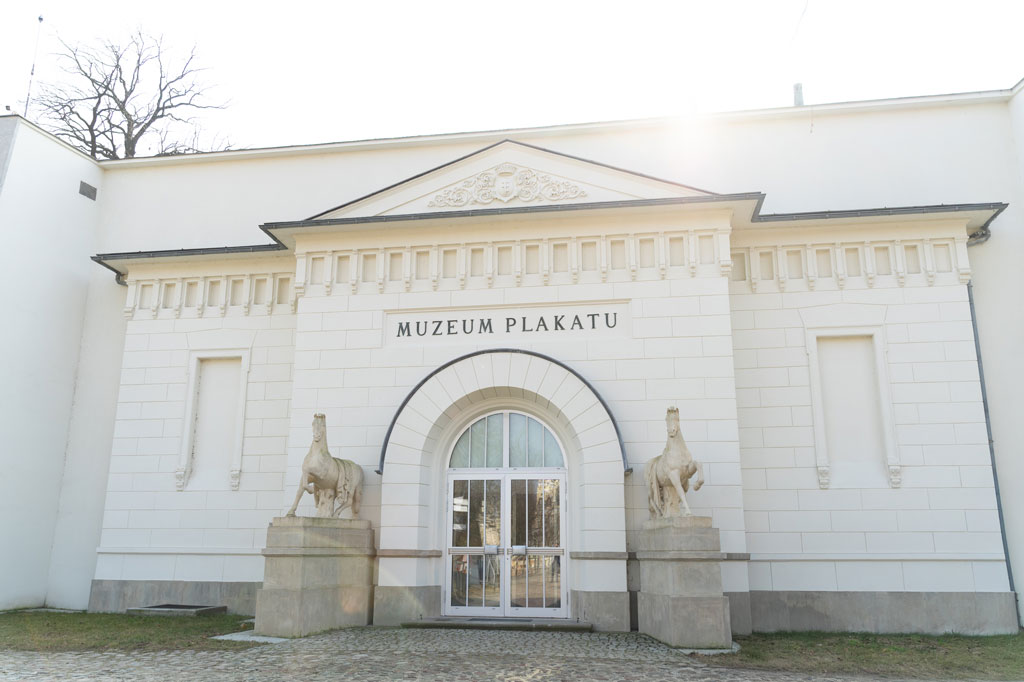
The entrance to the Poster Museum is marked by two sculpted horses, captured in a stately pose with hooves raised. Halina Kossuth was the architect responsible for the design of the Poster Museum building, in collaboration with Jacek Cydzik and Adam Pulikowski. The repurposing of a former riding arena, while preserving its mid-nineteenth century front elevation by Franciszek Maria Lanci, was honoured in 1968 with the runners-up prize in the ‘Mister of Warsaw’ architectural competition. After a hiatus of several years for a comprehensive renovation, the Poster Museum is once again opening its doors to visitors.
A trip to the Poster Museum is well worth combining with a visit to the Museum of King Jan III’s Palace at Wilanów and a stroll through the baroque gardens − the palace and park complex are among Poland’s most beautiful.
Admission to the Poster Museum is free on Wednesdays.
For more tips on how to visit Warsaw sign up for our newsletter and stay up to date!
* By clicking the ‘Subscribe’ button you consent to receiving the newsletter from us and accept the Regulations of the ‘Newsletter’ service. We will process your e-mail address for the purpose of sending you the newsletter. The administrator of your personal data is the Warsaw Tourism Office. More information on the privacy policy and cookies policy and clause concerning the processing of personal data.