

Warsaw inspires: an interview with Aleksander Prugar and Helena Czernek—founders of the new museum MI POLIN MEZUZAH CENTER
What is MI POLIN?
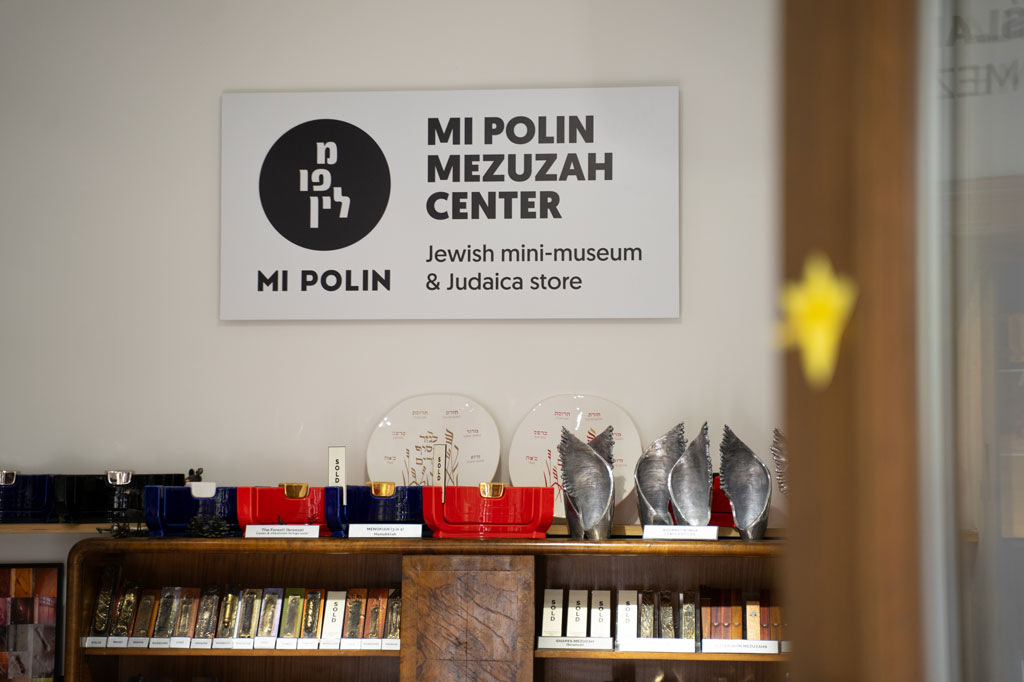
Aleksander: Helena and I founded MI POLIN—the first Polish post-war brand of Judaica, or items used to celebrate Jewish cultural and religious rituals. Before the war, there were several dozen manufacturers of such items in Warsaw, including the well-known Norblin and Fraget factories, which had divisions dedicated to this production. The capital was the focal point of Jewish art in pre-war Poland. The war destroyed this important element of Polish culture. This was the Warsaw tradition we decided to resurrect by creating MI POLIN. We design mezuzahs, menorahs, and jewellery.
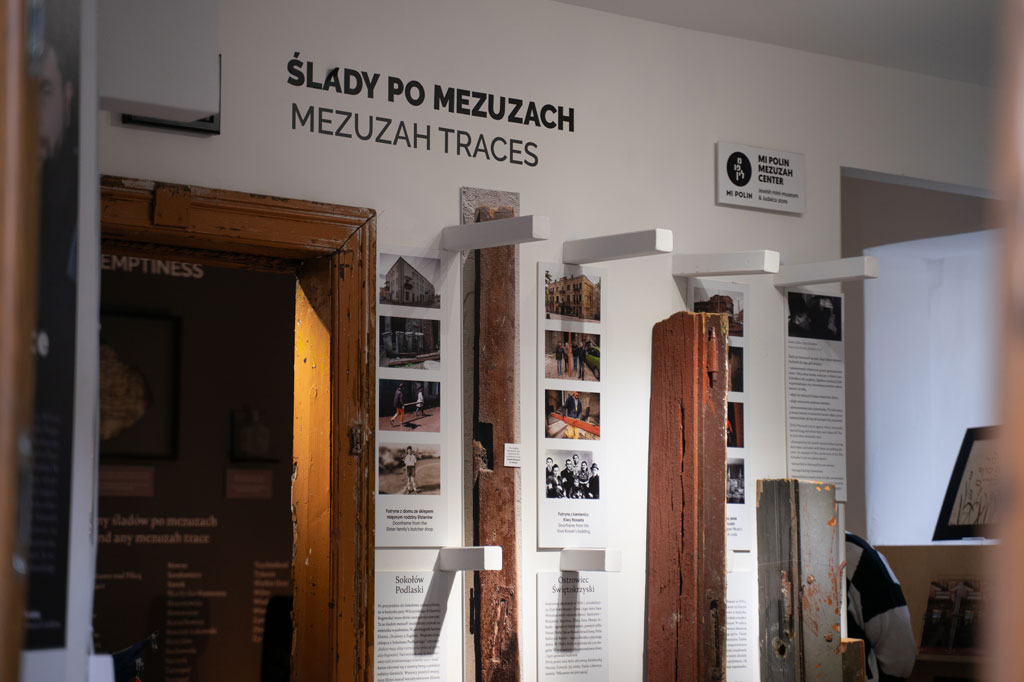
Helena: For 12 years, Aleksander and I have been searching for traces of mezuzahs. A mezuzah is a Jewish custom that requires a small container bearing a fragment of prayer from the Torah to be attached to the right side of a door frame. We estimate that there may have been around 10 million mezuzahs in Poland before the war. Most of them were destroyed as a result of the war and communism, leaving only traces—recesses, nails, outlines in paint. We have managed to find 205 such traces. By searching for them, we symbolically rebuild the world from before the Holocaust. The first trace was discovered at 12 Ząbkowska Street in Warsaw.

So, based on MI POLIN, you created a new museum in Warsaw?
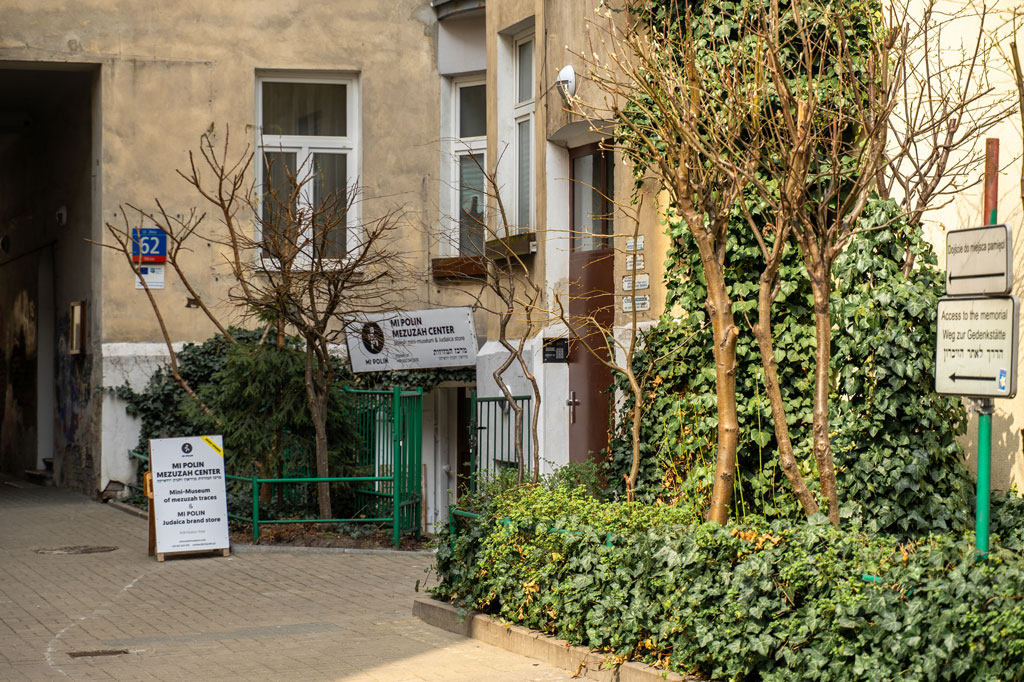
Helena: Based on our research and studies, we opened the Mi Polin Mezuzah Center at 62 Złota Street in Warsaw. Our centre is located right next to a remnant of the former Warsaw Ghetto wall. This is probably the world’s first museum dedicated exclusively to traces of mezuzahs. We relate Polish-Jewish history through the prism of these traces. Last year, a Holocaust survivor visited us and said, “It’s good that you talk about how it used to be.” This is an innovative approach as until now, traces of mezuzahs have not really existed in the collective consciousness.
Aleksander: Often, traces of mezuzahs are only the starting point for broader stories—about the Holocaust, Auschwitz, Katyń, Volhynia, about the war. This is a difficult subject, because these marks symbolise emptiness. But through them we talk about emotions, and actually—about life. Through memory, we bring a lost world back into existence.
Helena: We try to strengthen the Polish component of this complex Polish-Jewish identity. We conduct lectures, run artistic workshops, and teach how to recognise mezuzah traces. People visit us whose forebears once lived in Poland and Warsaw. They come here out of a need for remembrance, solace, from a longing to see where their parents or grandparents came from. We bring them closer to this Poland—their ancestral homeland.

Is Warsaw a good place to create?
Aleksander: Warsaw and Varsovians welcomed me with kindness. I decided to work for this city and its people. I created a photographic documentary about Warsaw, which was obscured for years by huge advertising banners. I named the project Reklamiasto (Ad-town). It was published in a spread in the Gazeta Wyborcza newspaper with a circulation of a million copies. This material sparked a public discussion about the littering of urban space with advertisements and drew attention to the difficult living conditions of residents—covered windows, lack of access to daylight and fresh air. Years later, the problem was resolved, and we—Varsovians—regained our city.
Helena: This city is very inspiring! In 2010, to mark Chopin Year, I designed a pedestrian crossing in the form of a piano keyboard, connecting Central Station with Defilad Square—on Emilia Plater Street. Warsaw is open to artistic endeavours that residents can use on a daily basis. Our city is an ideal place to create—here art becomes part of the urban landscape, gains functionality, is subject to interpretation and immediate social response.
Can design tell the story of Warsaw?
Helena: I created a paper daffodil to celebrate the anniversary of the Warsaw Ghetto Uprising. Then I asked myself: how can design serve to commemorate history? In this case, I used design—that is, a tangible, designed object—to talk about intangible values such as memory, identity, courage, Warsaw. People pinning daffodils to their clothes symbolically identify with the commemorations and remember the victims and heroes of the only Jewish freedom uprising during World War II.
What is Warsaw’s most important attraction?
Alexander: Life! The most important element of Warsaw is the possibility of experiencing the power of life through contrasts. On the one hand, we have uprising monuments, tenement houses that survived the war, cemeteries—places conducive to reflection on history and the building of one’s own identity. And a moment later, you can sit by the Vistula River and admire the beauty of raw nature. Every day I drive by the Warsaw Mermaid monument on the Vistula Boulevards. Looking at her, it is impossible not to fall in love—either with her or with Warsaw. Sometimes I give her a sneaky wink—it brings me luck. It is love reciprocated. Fulfilled.
Aleksander, where did you come to Warsaw from?
Aleksander: I came to Warsaw 20 years ago, from Silesia. I got a job as a photojournalist at the headquarters of Gazeta Wyborcza—it was a dream come true! The management at the time wanted me to get to know the history of the city well, which is why for years I was entrusted with documenting commemorations of the Warsaw Uprising anniversary. In the stories of the Insurgents I heard echoes of the wartime yearning for freedom. I was 20 at the time. For me, Warsaw has always been a place where dreams come true. It still is.
And your Warsaw story, Helena?
Helena: My connection with Warsaw is family—some of my grandparents came from here. But despite that, I grew up in the countryside because my mum didn’t want to live in the city. My other grandfather, a native of Kraków, moved to Warsaw during the war so he and his family could be more anonymous. When the Warsaw Uprising broke out, he joined the fighting with great commitment and faith. He took part in one of the key battles—for the PAST building. My grandfather told me where he and his comrades in arms built barricades: on Próżna, Warecka, and Nowy Świat streets. Today, I walk my son to kindergarten through the same streets. I moved to Warsaw to study, like Aleksander—20 years ago.
For more tips on how to visit Warsaw sign up for our newsletter and stay up to date!
* By clicking the ‘Subscribe’ button you consent to receiving the newsletter from us and accept the Regulations of the ‘Newsletter’ service. We will process your e-mail address for the purpose of sending you the newsletter. The administrator of your personal data is the Warsaw Tourism Office. More information on the privacy policy and cookies policy and clause concerning the processing of personal data.