
Hidden pearls of Warsaw’s Muranów district
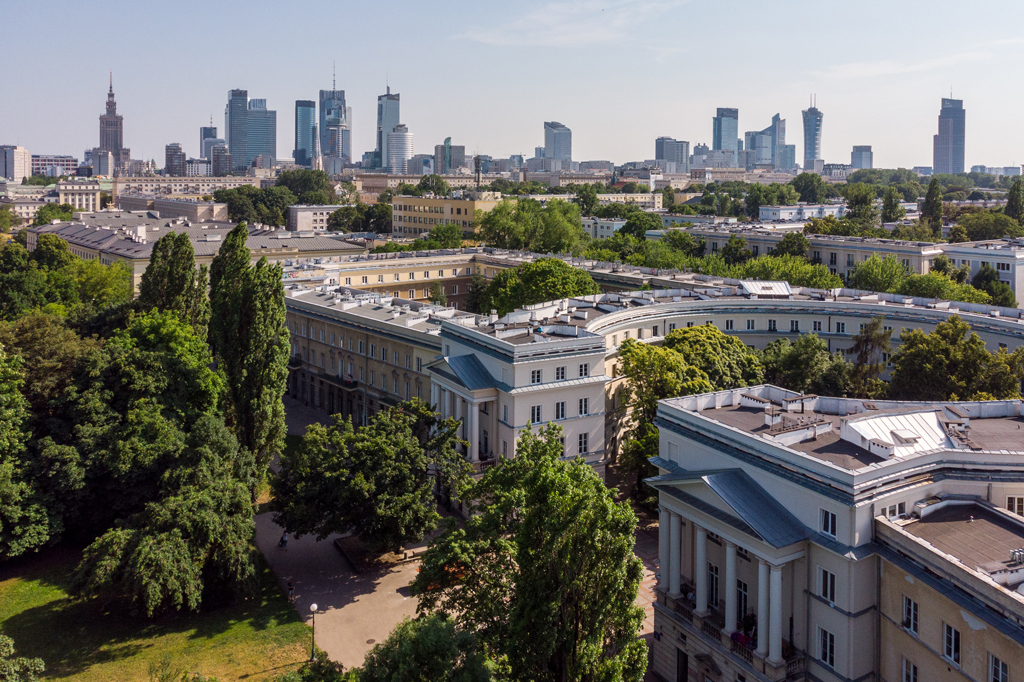
Warsaw is a city that hides many extraordinary stories, and the Muranów district is the best example of this. I invite you for a walk during which you will discover an exceptional place in the city. Leisurely strolls in which you get to know a particular quarter of the city better are the best way to immerse yourself in the history and greenery of Muranów.
Muranów was rebuilt on the ruins of the Warsaw Ghetto. After the Second World War, during the Warsaw’s reconstruction, the rubble of demolished buildings was used to build new homes. Pay attention to the terrain in Muranów. The knolls and steps you pass by are the very ruins of the ghetto.
The district of full of greenery, so start your walk in Krasiński Garden. This is one of the oldest and most beautiful parks, founded in the 17th century. Before World War II, due to its proximity to the Jewish quarter, the park enjoyed great popularity among Warsaw’s Jews. It was here that they discussed the future, but it was also possible to enjoy bagels. A memento of those days is the beautiful gate leading to the park. Not far from the gate is the exceptional baroque Krasiński Palace with its beautiful interiors, built between 1677 and 1683, and recently opened to visitors.

During your journey around Muranów, it is worth stopping for a moment by the famous Mirabelle plum tree (it grows near the Polish First Army Soldier monument on Gen. Władysława Andersa Street)—a tree that survived the war, the ghetto and the post-war reconstruction. The ‘Mirableka’ has even been written about by famous Polish authors.
Another symbol of the district is the mural trail. These colourful works of street art tell the stories of residents and historical events and prompt us to reflect on memory. It’s worth paying attention to the mural commemorating the Esperanto language and its creator, Ludwik Zamenhof. It was here in Muranów that the idea was born of a language intended to connect all people. A few steps further on you will see a mural depicting an owl and an atom. This one remembers Maria Skłodowska-Curie. Few people know it, but the famous double Nobel Prize winner lived in this very part of the city.
Walking further along Nowolipki Street, pay attention to the brick church tower. This is one of the few buildings that survived the demolition of the ghetto and will always remain a witness and symbol of the destruction and rebuilding of Warsaw.
Muranów is a district that needs to be discovered at leisure. Among the numerous monuments commemorating the most tragic events from the history of Warsaw’s Jews, you will find plenty of modern art galleries run by the best Polish artists. Here history is intertwined with the present.
Author: Katarzyna Jankowska, Warsaw guide