Go To WarsawSpring in Warsaw − time to explore the city
Spring in Warsaw − time to explore the city
In spring in Warsaw, you can feel the city awakening after winter. With each new day, as the temperature rises, the capital gains new energy − seasonal events start, new attractions appear, and the streets are filled with people out walking. It’s the perfect time to explore the city in full bloom!
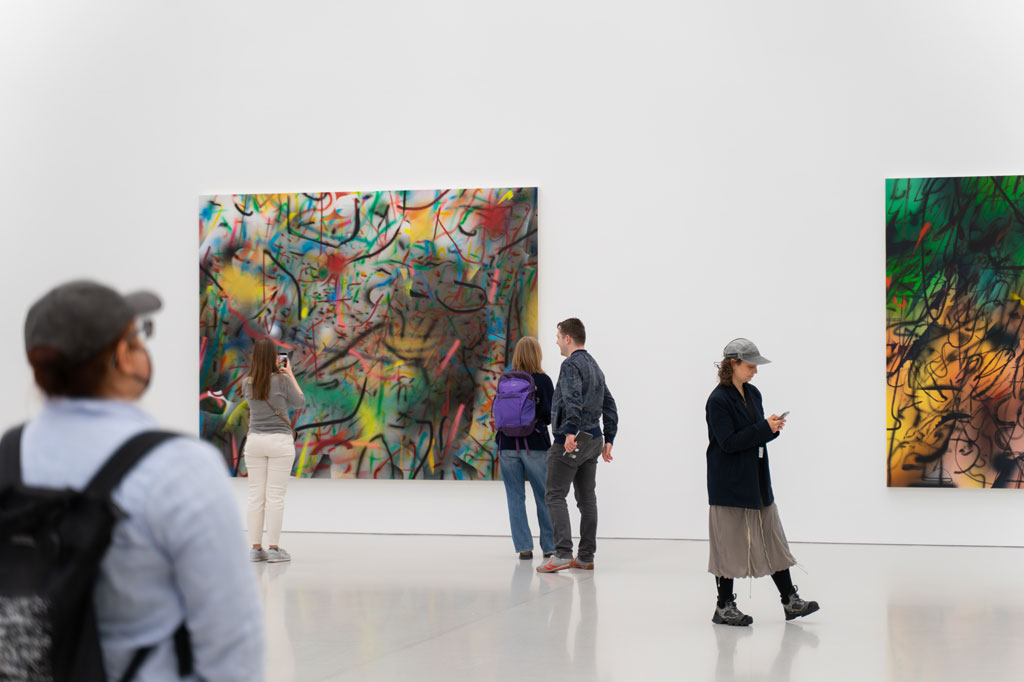
Get started with three new exhibitions at the Museum of Modern Art
From large-format canvases by Julie Mehret, through Maria Jarema’s monotypes, to a monumental Minh Lan Tran installation created especially for the Museum of Modern Art‘s stairway space, the new exhibitions explore the legacy of American expressionism, European modernism, and abstraction. They can be viewed from March in the building at Marszałkowska 103. The projects were created in collaboration with international institutions and present a cross-section of the artists’ works, from modernism to contemporary experiments with form.
Museum of Modern Art, photo: Maciej Deperas
The only such night of the year
On the night of May 16–17, Warsaw invites the public to its latest Night of Museums − a great opportunity to visit usually inaccessible places, including basements, studios and archives. Last year’s event was attended by nearly 23,000 people, enjoying the offers of more than 300 venues. Among the sites the crowds visited were the depots of the Municipal Bus Company, the Royal Castle, the Copernicus Science Centre, the National Museum and the Warsaw Garrison Command. Passengers were also keen to use special vintage transport routes to discover the city in an unusual and surprising way. All events are non-commercial and participation in them is free of charge. A detailed programme and list of participating facilities will be available on a special event page to help everyone plan a night full of culture and unique experiences.
Night of Museums, the National Museum, photo: Ewelina Lach
Outdoor activities
Cross-country running trails, city bikes and outdoor gyms are just some of the suggestions for activities in the open air this spring. Warsaw offers many running routes, including through green areas that look enchanting at this time of year. In early March, the Veturilo season traditionally starts − 3,500 bicycles await users at almost 350 rental points throughout the capital, and city bikes are a convenient, cheap and ecological means of transport. There are already 873 km of cycle lanes in Warsaw. Last year alone, 57.5 km of new routes were built, and 20.7 km of existing ones renovated. Never before has the construction and renovation of cycle lanes in the capital been so rapid, and further cycling infastructure investments are already underway. More info on the new routes and projects is available on the Rowerowa Warszawa (Bicycle Warsaw) website.
Grzybowski Square, photo: Łukasz Kopeć
Traditional Vistula sailing
It is hard to imagine Warsaw without the Vistula − the river has played a key role in the city’s history and development for centuries. These days its banks are bustling with life, especially in spring, when the boulevards become the perfect spot for a walk, a bike ride, or to unwind with a coffee. For those who long to take to the water and see Warsaw in the rays of the spring sun, the Vistula District has plenty of boats on offer. From the end of March and throughout the summer season, you can enjoy a free cruise along the river on board a traditional wooden galar. This is a great opportunity to relax on board and discover the city from a perspective that cannot be seen from the mainland.
Praska Beach, photo: Łukasz Kopeć
At the same time, regular workshops are held at ‘Szkutnia po Godzinach’ (the After-Hours Boatyard). Every Thursday and Saturday throughout the season, the Warsaw Water Sports Club (Warszawski Klub Wodniaków) offers the chance to meet real-life raftsmen and boat-builders at their headquarters. They demonstrate how to build the traditional boats that can be found not only on the Vistula River, but also on other inland waterways around the world. All work is done true to the traditional craftsmanship of boat-builders. The hand-made crafts are then launched onto the water, and the best events to show them off them at are the Urzecze Rally and the Warsaw Wooden Boat Festival.
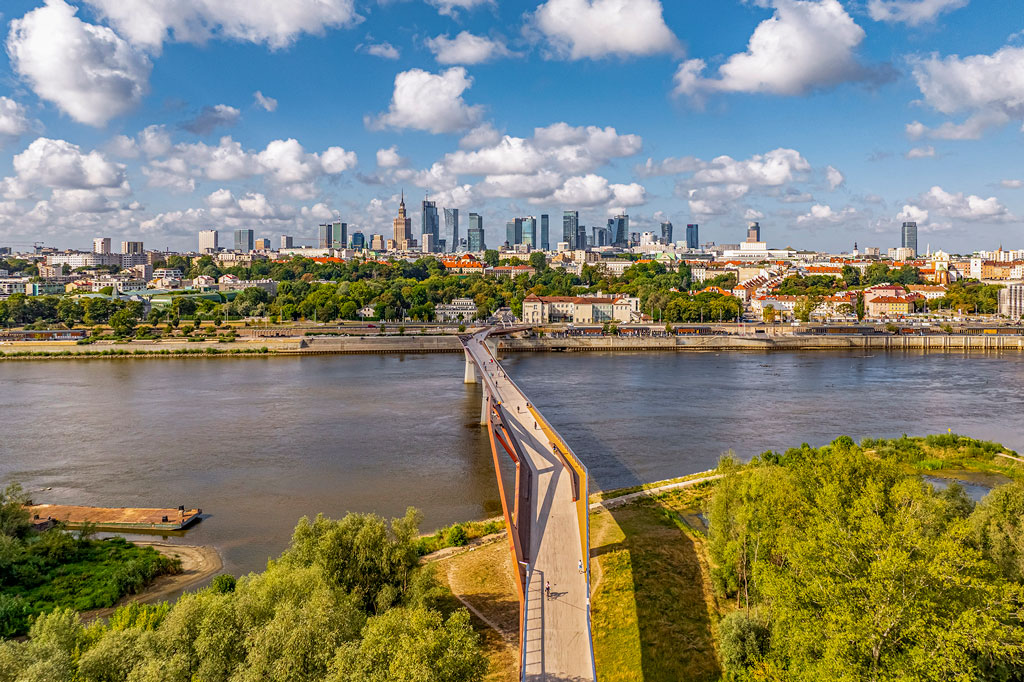
Before the summer season gets underway on the boulevards and crowds of strollers appear, it is worth taking advantage of the tranquility of spring to discover the Vistula District‘s charms in a more peaceful atmosphere. Walking along the boulevards by the river, you will come to a pedestrian and bicycle crossing that connects the two banks of the Vistula. Apart from its practical purpose, the bridge offers amazing views of the Warsaw skyline.
Panorama of Warsaw, photo: City of Warsaw
Praga unfiltered
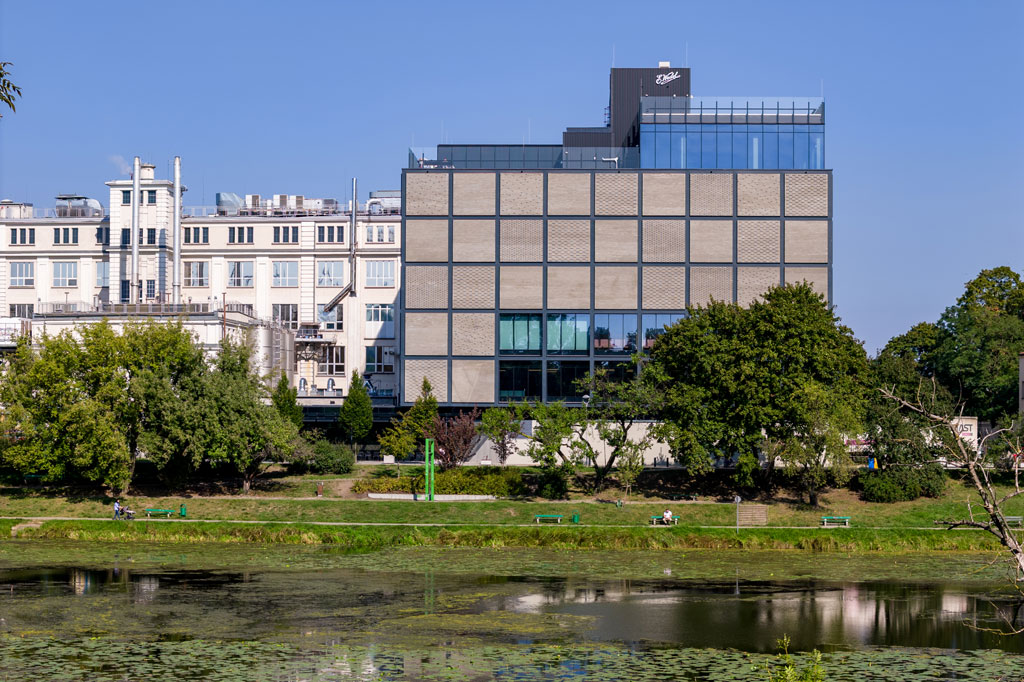
On warm days, take a walk along the cycle and foot bridge to the Praga district and visit attractions including the interactive E.Wedel Chocolate Factory Museum, created with children in mind. Visitors can touch the exhibits, try roasted cocoa beans or molten chocolate − just before it becomes a praline or a chocolate bar. You can also peer inside a vat to see how the filling is made, or look through a microscope to watch cocoa beans fermenting. Also, don’t miss the chance to listen to the sounds of a cocoa plantation.
Another popular attraction is the observation deck on the sixth floor, which offers a panoramic view of Warsaw and a view of Kamionek Lake. The building’s façade attracts particular attention as it has been designed to look like a chocolate bar with each ‘cube’ decorated with a different image recalling the historical decorations of the Wedel factory building.
Today, the Praga district is impressive for its diversity and unique character − from historic tenement houses and monuments to modern cultural spaces and vibrant meeting places. A walk around this part of the city shows Warsaw from a completely new, fascinating angle.